

The certificate of non-infringement of planning regulations is an essential document in many real estate transactions. Whether you are planning to sell a property, apply for a mortgage or carry out building work, this certificate can save you legal and financial problems. However, many owners are unaware of its importance until they encounter an obstacle in the process.
If you read on, we will explain what it is, what it is for, how to apply for it and what to do if your property has planning irregularities.
What is the certificate of non-urban infraction and why is it so important?
The certificate of non-existence of town planning infringements is a document issued by the corresponding Town Hall that certifies that a property has no pending town planning sanctions or irregularities.
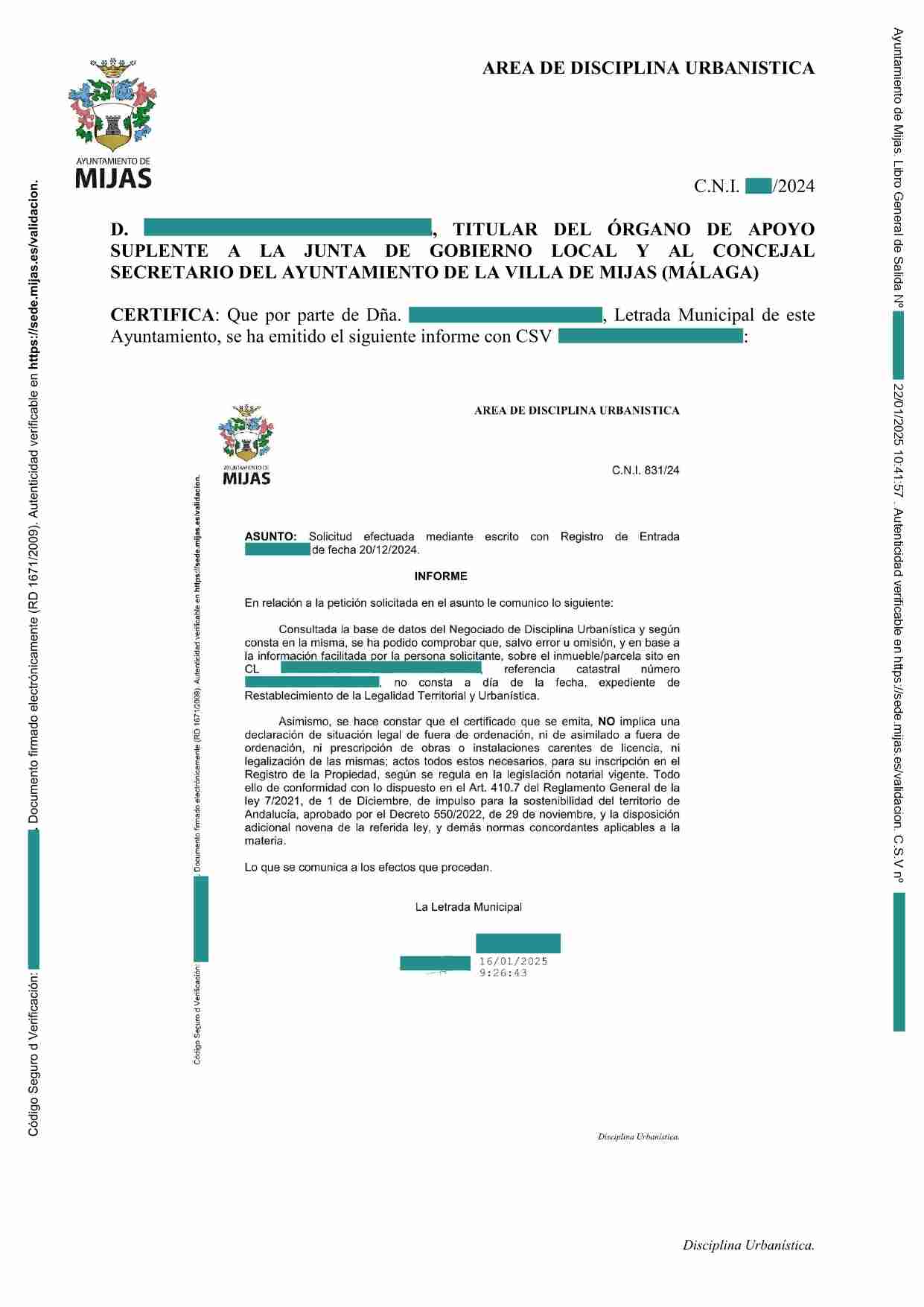
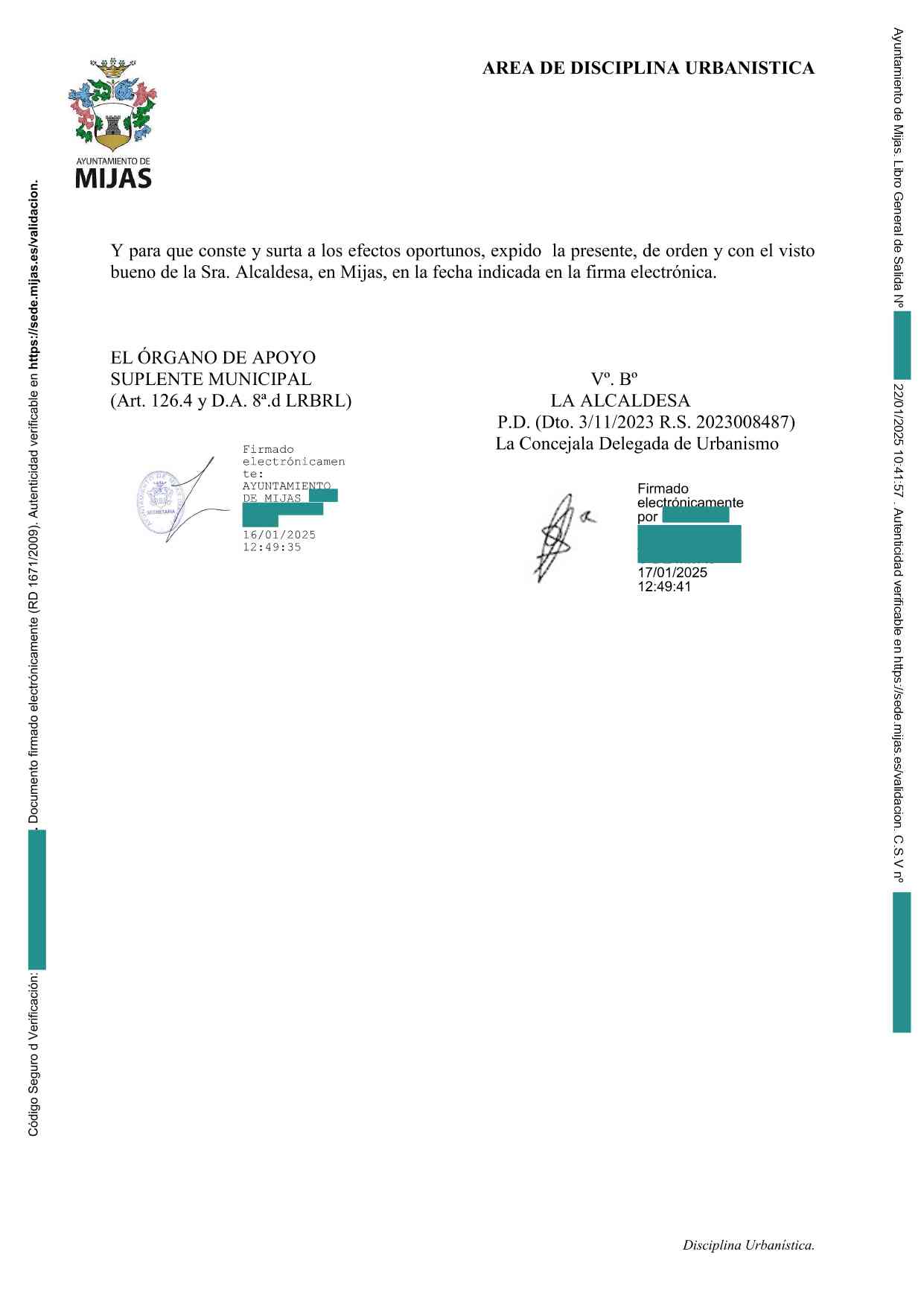
Real example of a CNIU (Certificate of non-urban infraction)
Why is it important?
- It avoids legal problems in buying and selling: If the property has any infringements, the buyer could face sanctions or even be unable to use it as expected.
- It is compulsory for some procedures: Banks, notaries and public administrations may request it in certain cases.
- It provides legal certainty: Especially useful if you are buying a second-hand house or planning to carry out renovations.
Who needs this certificate and in what situations is it requested?
Cases in which it is necessary or advisable
- Sale of property: Some buyers and banks require it before closing a deal.
- Mortgage application: Many banks require it as a condition for granting loans.
- Legal certainty: If you bought a second-hand home and want to verify that everything is in order.
Requirements and documentation for application
To obtain the certificate of no urban planning infringements, you will need to submit an application to the corresponding Town Hall.
Who can ask for it?
- Property owners.
- Buyers with the authorisation of the owner.
- Developers or architects in charge of a project.
Required documentation
- Deed of ownership or simple registry note.
- Cadastral reference of the property.
- Proof of payment of administrative fees.
Approximate cost: It depends on the local council, but it usually ranges from 50 to 150 euros.
Issuance time: It can take between 10 and 30 business days, depending on the municipality.
Where and how can I request the certificate of non-existence of urban planning infringements?
Options for requesting it
- In person at the Town Hall: Go to the town planning department with the required documentation.
- Online: Many town halls allow you to apply online through their website.
- Through a professional: Architects, lawyers or agents can process it for you.
Tips to speed up the process
- Check before applying if your local council has long response times.
- Submit all documentation in order to avoid delays.
- Call the local council to confirm if and how to pay any fees.
What happens if there are planning infringements?
If the Town Hall detects a planning infringement on your property, several situations may arise:
- Fines and penalties: Depending on the severity, the fine can range from 600 to 6,000 euros or more.
- Inability to sell the property: If there is a serious infraction, you may have difficulties in registering the sale.
- Obligation to legalise the situation: In some cases, the infraction can be remedied through a regularisation process.
How can it be solved?
- Consult an architect or a lawyer specialising in real estate to assess the situation.
- Request a report on urban planning feasibility to find out if you can legalise the infringement.
- Carry out the necessary procedures for regularisation and present the documentation to the Town Hall.
If the infringement cannot be resolved, the Town Hall could even order the demolition of the illegal construction.
Mistakes to avoid when requesting the certificate
- Applying too late: Do it well in advance, especially if you plan to sell the property.
- Failing to submit all the documentation: A mistake in the paperwork can delay the process by several weeks.
- Failing to check the current regulations: Some constructions that were legal at the time may no longer comply with current regulations.
Frequently asked questions about the Certificate of Non-Infringement of Planning Regulations
Not always, but many buyers and banks require it as a guarantee.
It does not officially expire, but it is recommended that it is not more than 6 months old at the time of use.